

Form and Function

During the 1980s and 1990s the Fairmount Park Art Association (now the Association for Public Art) organized a series of benchmark programs with lasting influence on contemporary public art practice. These programs explored links between public art and various disciplines, including architecture, landscape architecture, and urban planning and investigated the pivotal role that public art can play in the design of cities and public spaces.To bridge the gap between public art and ordinary life, the Art Association initiated the pioneering program Form and Function in 1980. The Art Association invited artists to propose public art projects for Philadelphia that would be utilitarian, site-specific, and integral to community life—works that would be integrated into the public context through use as well as placement. Each artist was asked to give meaning or identity to a place, to probe for the genius loci, or the “spirit of the place.” The Art Association’s intention was to respond to the needs of a changing city, as well as to accommodate the expressions of individual artists.
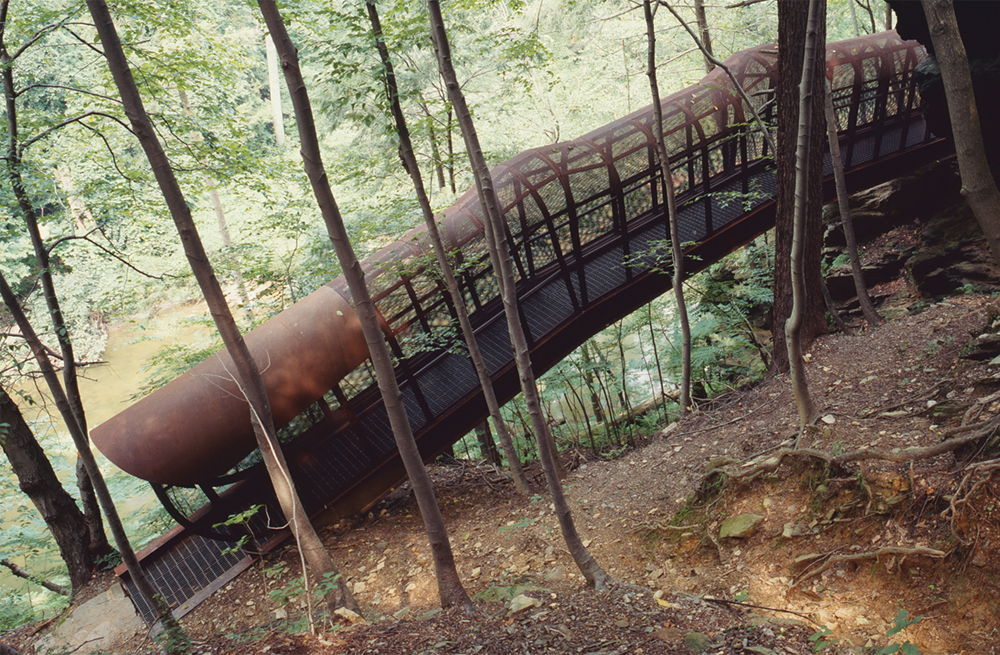
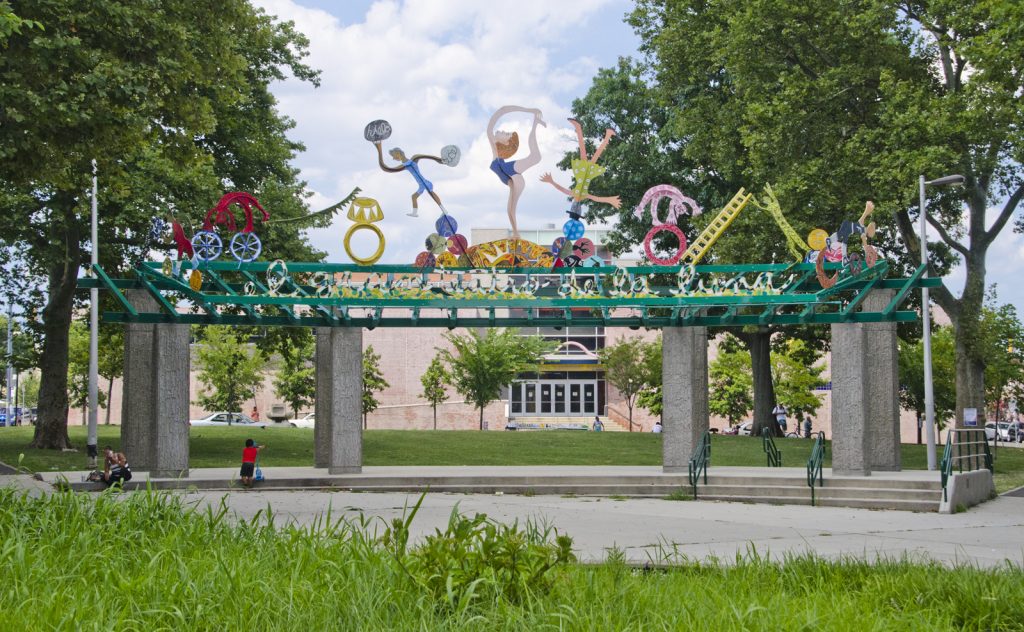
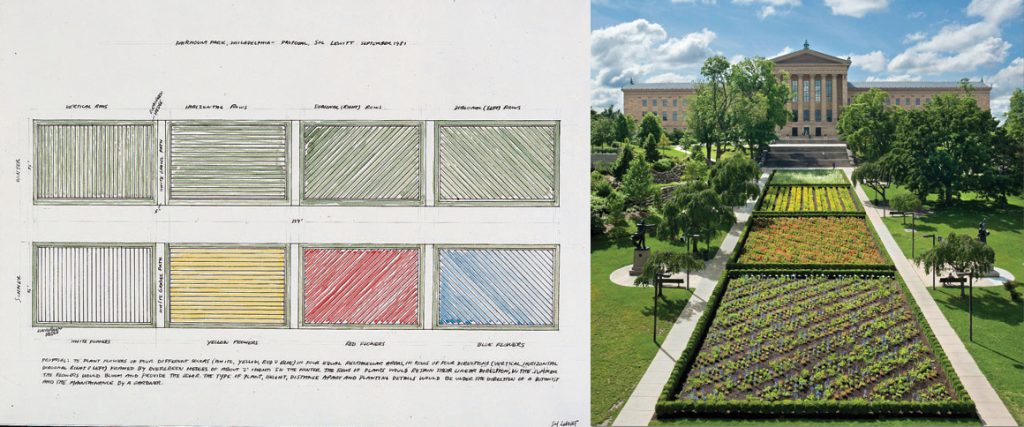
The resulting proposals, which ranged from lighting to the design of community parks, expanded the definition of public art in the early 1980s. An exhibition of the proposals as “works in progress” at the Pennsylvania Academy of the Fine Arts encouraged community dialogue. A catalogue of the projects accompanied the exhibition.The first proposed works to be installed (in 1982) were Rafael Ferrer’s El Gran Teatro de la Luna and Siah Armajani’s Louis Kahn Lecture Room. Red Grooms’s Philadelphia Cornucopia was carried out that same year as an independent project by the Institute of Contemporary Art. Richard Fleischner’s proposal for the new campus of Community College was thwarted when the site plans were unexpectedly changed, although his concepts were later realized through a fruitful collaboration with Mitchell/Giurgola Architects for the Columbia Subway Plaza. Jody Pinto’s Triple Tongue Pier was slowly transformed, and the resulting Fingerspan was installed along the Wissahickon Creek in 1987. Martin Puryear’s Pavilion in the Trees was installed in 1993 in Landsdowne Glen, behind the Horticulture Center. Other proposals were submitted by Scott Burton, Dan Flavin, Red Grooms, John Hedjuk, Robert Irwin and Barry Le Va.