New•Land•Marks: public art, community, and the meaning of place

New•Land•Marks: public art, community, and the meaning of place was a program of the Fairmount Park Art Association (now the Association for Public Art) that brought together artists and community organizations to plan and create new works throughout Philadelphia. New•Land•Marks proposals incorporated public art into ongoing community development, urban greening, public amenities, and other revitalization initiatives. These efforts celebrated community identity, commemorated “untold” histories, and offered visionary, yet reasonable, ways to invigorate public spaces. The program was selected for a 2002 Place Planning Award by the Environmental Design Research Association and Public Art Network’s 2004 Year in Review, a guide to the best U.S. public art projects.
To begin the New•Land•Marks program, the Art Association asked communities to volunteer their participation and simultaneously sent out a call to local, national, and international artists. To introduce the program, presentations and community meetings were held at branch libraries and cultural centers throughout the city, highlighting significant public art projects worldwide and the need for responsible stewardship. Communities were asked to think about what they wanted to leave for future generations. From hundreds of “Requests to Participate,” the Art Association invited eighteen communities and twenty-five artists to work with the program. For artists, the selection process focused on how their ongoing work addressed the stated interests of the community groups. For almost a year, community representatives and artists engaged in a dialogue and design development process.
The design development phase featured a series of Public Art Workshops that addressed essential issues related to the creation of public art. The series culminated in a New•Land•Marks Symposium at the Philadelphia Museum of Art in May 1999. At this significant event, artists and community participants presented their proposals in a public forum.
Sixteen proposals were endorsed by the participating communities, and the Art Association then commissioned five of these projects. Other proposals moved into a research and development phase. During 2000, a community exhibition traveled to locations in participating neighborhoods, offering the opportunity to view proposal materials in the community contexts from which the work emerged. A major exhibition about the program was on view at the Pennsylvania Academy of Fine Arts from February–April 2001.
For communities, the New•Land•Marks program was an opportunity to take an active role in defining the unique qualities of their neighborhoods. For artists, the program represented a chance to work directly with the public from an early point in the creative process. New•Land•Marks explored the central issue in today’s public art — namely, how to promote community engagement and, at the same time, create a framework for the most creative artistic outcome.
New•Land•Marks was made possible through the generous support of the William Penn Foundation, the Andy Warhol Foundation for the Visual Arts, the National Endowment for the Arts, the Pennsylvania Council on the Arts, the Samuel S. Fels Fund, the Independence Foundation, the Leeway Foundation, the Mid Atlantic Arts Foundation, and the Philadelphia Exhibitions Initiative, a grant program of The Pew Charitable Trusts administered by The University of the Arts, Philadelphia.
New•Land•Marks Projects

The Labor Monument: Philadelphia’s Tribute to the American Worker
John Kindness

Embodying Thoreau: dwelling, sitting, watching
Ed Levine
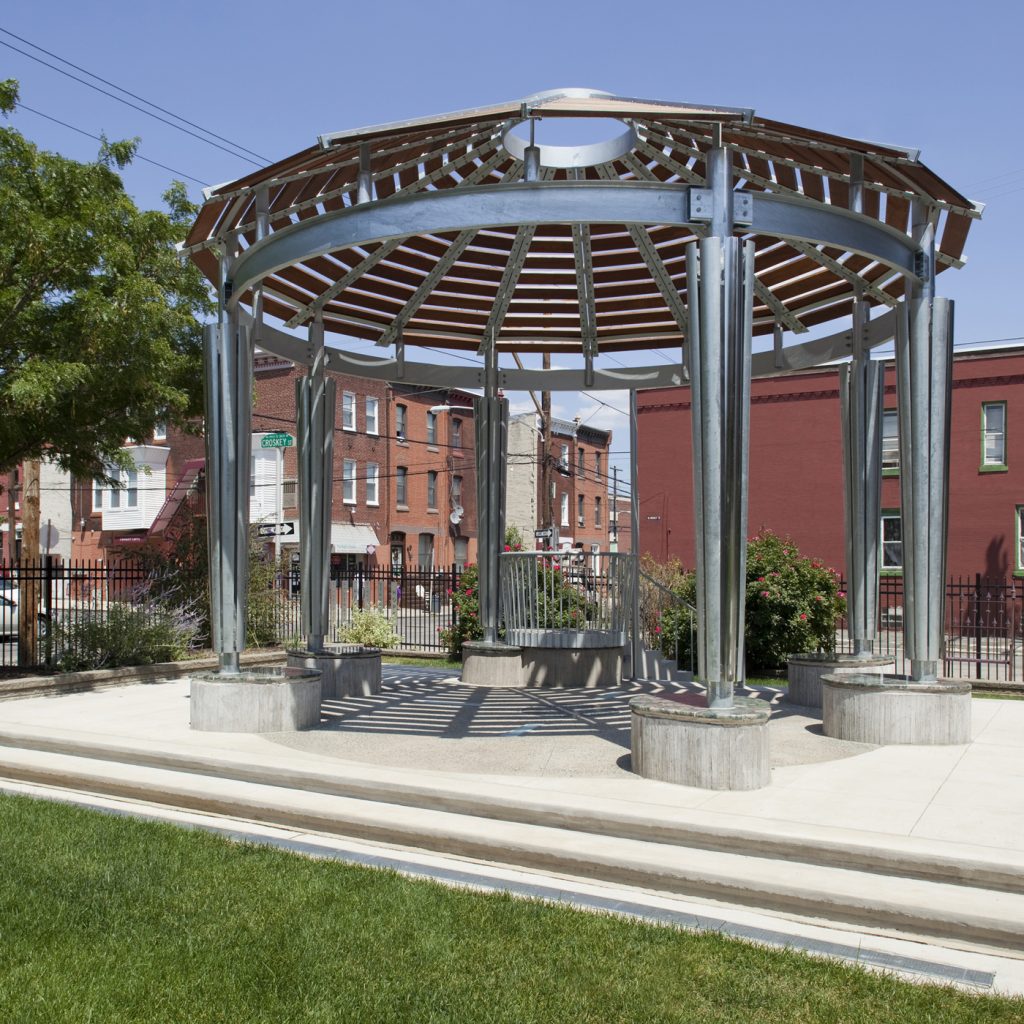
Common Ground
artists John H. Stone and Lonnie Graham and author Lorene Cary

Manayunk Stoops: Heart and Home
Diane Pieri

I have a story to tell you…
Pepón Osorio